
Hammersmith Road,
London W14 8UX
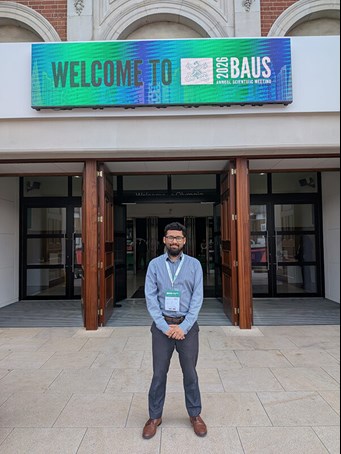
Report by: Ahad Khan, Core Surgical Trainee, North East London, UK.
After three years in Birmingham, BAUS 2026 returned to London for the first time in decades, delivering a dynamic programme of innovation, education and debate. Across three days, delegates explored advances in Artificial Intelligence (AI), robotics, oncology, endourology, reconstruction and research, alongside inspiring keynote speakers and lively discussions on the future of urology.
AI emerged as one of the meeting's defining themes. The opening plenary explored its transformative role in surgical care, from agentic AI and the concept of the multi-agent operating theatre to autonomous robotic surgery, highlighting a future where surgeons work alongside trustworthy intelligent systems. Delegates were also introduced to the National Prostate Cancer Bio-Digital Twin within the landmark TRANSFORM trial, which combines clinical, imaging and biological data to accelerate biomarker discovery and support more personalised prostate cancer care.
While technology dominated many sessions, the programme also highlighted the human side of medicine. Olympic gold medallist Pete Reed delivered a compelling keynote on illness, recovery and resilience, sharing lessons on accountability and striving for excellence in the fundamentals. The BAUS Section of Trainees (BSoT) followed with a thought-provoking session on surgeons' wellbeing, recognising burnout and performing under pressure, while also unveiling a new educational website designed to support trainees on call.
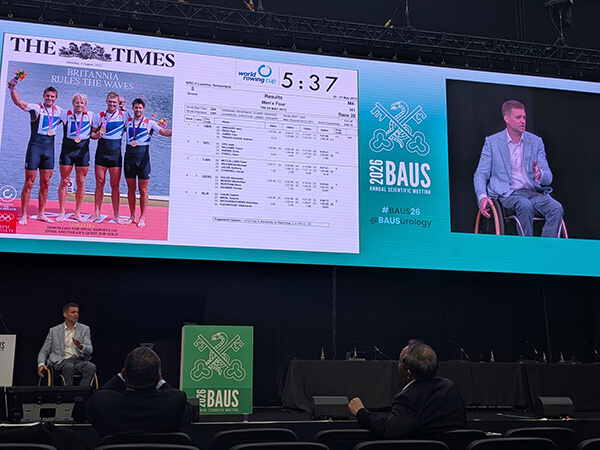
Pete Reed on stage at BAUS 2026.
The inaugural Residents' Bowl brought together trainees from every UK deanery for a lively test of knowledge across urological subspecialties, the history of urology and recent research. Questions, written by leading urologists and drawn from the SmashUrology question bank, kept the competition both challenging and entertaining, making the BSoT stand one of the loudest in the hall.
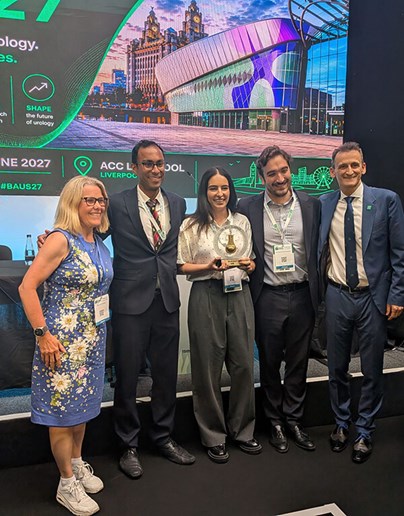
Residents' Bowl Winners.
Day 2 began with the annual 5km Fun Run and, for the first time, a Fun Walk supporting The Urology Foundation (TUF). AI remained a central theme throughout the day, with speakers demonstrating how machine learning is already enhancing clinical decision-making. One highlight was the presentation of predictive models developed from data on more than 13,000 percutaneous nephrolithotomy (PCNL) patients, showcasing personalised outcome predictions that outperform traditional statistical approaches. Speakers also explored the practical implementation of ambient AI scribes, emphasising the importance of informed patient consent, clinician oversight and the ethical responsibilities accompanying these emerging technologies.
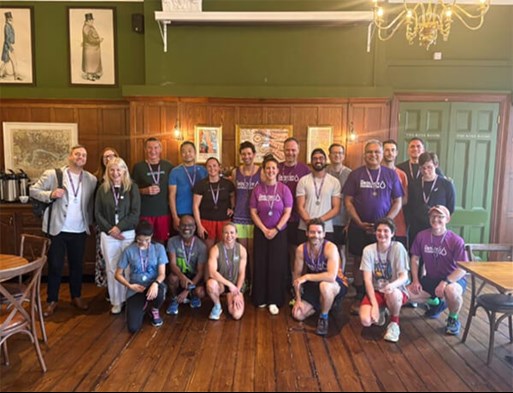
TUF Walk group picture.
Attention then turned to cosmetic genital surgery, and one of the discussions that stood out was on the increasing demand for penile enhancement procedures and the need for urologists to lead evidence-based care to improve patient safety.
The TUF x BURST Research X-Factor then showcased ambitious research proposals from emerging clinician-scientists. Innovation continued during the International British Urology Society (IBUS) session, where speakers explored advances in stone surgery and the future of telesurgery. Discussions considered how robotic surgery could be extended to underserved regions through hub-and-spoke models, while acknowledging the technical, ethical and legal challenges, including connectivity, cybersecurity, consent and clinical responsibility, that must be overcome before widespread adoption becomes a reality.
The final day focused on the future of the profession, beginning with discussions on widening participation in medicine before celebrating excellence through the BAUS medals and awards. Following the presidential handover, incoming BAUS President Joe Philip outlined an ambitious vision centred on education, digital innovation and lifelong learning.
The conference concluded with the ever popular ‘What's New in Urology & Best of BAUS,’ delivering a rapid-fire summary of the meeting's most impactful research and clinical advances. The inaugural Residents' Bowl Final then saw North London win over the North-East to lift the first Bell Clapper Trophy. The final combined challenging clinical questions with light-hearted moments, including a question about Ian Pearce's favourite snack (biscuits), providing a memorable and fitting finale to a meeting that celebrated innovation, education and collaboration.
We leave London inspired, better informed and excited for what lies ahead, with our eyes already set on BAUS 2027.