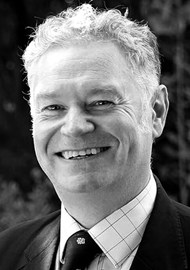
In this series of articles, I show you some of the exhibits contained in the Museum of Urology, hosted on the BAUS website (www.baus.org.uk). I was recently asked to look into the background of the Winsbury-White Lectures, given biannually at the Royal Society of Medicine Urology Section. I knew a little about Winsbury-White (1889–1963), as a past president of the Section and as one of the co-founders of the BJUI, but as I read, I became more intrigued by his story.

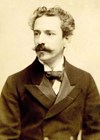
Figure 1: Horace Powell Winsbury-White. Photograph of a portrait by William Jarvis Rowden. BAUS.
Horace Powell Winsbury White (Figure 1) was born in Blenheim, on New Zealand’s South Island, on September 28 1889. He was the son of John James Winsbury White (1844–1931), a local government official, and Frances Louisa Powell (1858–1904) of Hobart, Tasmania. He was educated at Marlborough College, New Zealand, where he was a colour sergeant in the Cadet Corp (1904–1908) and cadet corporal in the Officer Training Corps (1909–1912). He then travelled to Edinburgh University to study medicine, qualifying in 1914.
In November 1914, he joined the Royal Army Medical Corps as a lieutenant. He served in Flanders and was wounded in the right leg at the Second Battle of Ypres in May 1915 (Figure 2). In December that year, his commission with the War Office about to expire, he sailed for New Zealand on the SS Ionic with the intention of joining the New Zealand Army.

Figure 2: Lt HPW White RAMC. From a contemporary newspaper. Website of the Auckland Museum. No known copyright restrictions.
In 1917, he passed the Edinburgh FRCS and, when on 18 April 1917 he joined the First New Zealand Expeditionary Force, his address and employer was still The Edinburgh Royal Infirmary where he clearly had worked and studied between his two commissions in the British then New Zealand armies. He joined the New Zealand Medical Corps with the rank of captain in April 1918. He served in France in 1917–18 and then in the Army of Occupation on the Rhine in 1918–19.
After the War, he became resident surgical officer at St Peter’s Hospital for the Stone in 1921 working for Clifford Morson (1881–1975). He passed the English FRCS in 1922 and in 1924 was married to Concha Marguerite de Courcy (May) Brodie in Marylebone. In 1925, White became assistant surgeon at St Paul’s Hospital for Urological and Skin Diseases. He also became consultant urologist to the Italian Hospital, the Queen Elizabeth Hospital for Children and St John’s Hospital, Lewisham.
On 26 November 1930, Horace Powell Winsbury White changed his name by deed poll to Horace Powell Winsbury-White, hyphenating the Winsbury which clearly had been an old family name.
White presented his work on hydronephrosis at the 1924 BMA Annual Meeting in Bradford; this subsequently won him his first Hunterian Professorship at the Royal College of Surgeons in 1925. In 1933, he was awarded a second Hunterian Professorship for his work on the spread of infection from the uterine cervix to the urinary tract and kidney. He was invited to present this work at the prestigious AUA Guitaras Lecture in 1936. In 1938, he was elected President of the Section of Urology of the Royal Society of Medicine. At his presidential address he presented a personal case series of 455 urinary tract stones. He was also present at the first planning meeting of BAUS on 11 December 1944 at the house of Sir Eric Riches.
In March 1929, along with Frank Kidd (1878–1934), Winsbury-White founded the British Journal of Urology. As well as contributions from Britain, Ireland, the British empire and the dominions (Winsbury-White of course being from one of those dominions) they encouraged participation from America and promised that every issue should have an American paper published within it. In that first issue, Hugh Hampton Young (1870–1945), then editor of the Journal of Urology and the ‘father of American Urology’ published a letter of welcome. Kidd died young, but Winsbury-White continued to publish the journal as editor for 20 years, then as consultant editor for a further 14, until his death. Winsbury-White financed the early editions of the BJU himself, at considerable personal expense and during the Second World War he ran the journal single handedly. Winsbury-White also edited, along with JD Fergusson (1909–1979), the Textbook of Genito-Urinary Surgery. This was finally published in 1948; unfortunately, although all the material for the book was ready in 1941, it was destroyed in an air raid whilst at the publishers and he was forced to re-write the whole volume of over 1000 words. The second edition came out in 1961 demonstrating his continuing work and intellectual capacity in his early 70’s.

Figure 3: The Italian Hospital, Queen’s Square, London. Image in the public domain.
As Dean of St Paul’s Hospital, he was closely involved in its amalgamation with St Peter’s and the subsequent foundation of the Institute of Urology in 1947 where he was appointed to the academic board. He was later surgeon to all the ‘Three P’s’, the famous London urological hospitals, St Peter’s, St Paul’s and St Philip’s. The Italian Hospital was established in 1884 in Queen’s Square for Italian speaking people in London, although treatment was given to any needy person and usually only about half of its patients were Italian. Winsbury-White was a consultant to the Italian hospital for many years (Figure 3) and later chairman of the medical committee. In 1955, he was made a Commendatore ordine al merito della Repubblica Italiana (commander of the order of merit of the Italian Republic) for his long and distinguished service (Figure 4).

Figure 4: Decoration of commendatore ordine al merito della Repubblica Italiana. Image by Graf Von Ebbell (Cropped). Creative Commmons Licence. https://creativecommons.org/licenses/by-sa/4.0/.
Winsbury-White’s first wife sadly died in 1948. He married again in 1953 to Elizabeth Holmes. Away from medicine, Winsbury-White was a member of the Freemasons, a keen fisherman and horseman, a well-known collector of jade and, latterly, a keen gardener. Horace Winsbury-White died on 6 November 1962 at the age of 73 after an accident whilst cutting trees in the garden of his country home, in Whitchurch. He was survived by his wife and their adopted son. In his will, Winsbury-White left £1000 in Marks and Spencer shares to the Urology Section of the Royal Society of Medicine to provide for a series of lectures to be given every two years. This fund is still extant and the lectures continue today.
Horace Powell Winsbury-White was born in New Zealand, a Kiwi, but at that time very much a British subject. Training in Scotland, working in England, he was a member of the International Society of Urology (SIU), the Association Française d’Urologie and an honorary member of the American Urological Association and, of course, a Commendatore ordine al merito della Repubblica Italiana. It is fitting therefore that his legacy is often used to fund overseas speakers for the RSM Urology Section Winsbury-White lectures.