In this series of articles I am going to show you some of the exhibits contained in the new BAUS Virtual Museum of the History of Urology which is part of the BAUS website (www.baus.org.uk). In the last issue I asked if you knew what this unusual looking piece of kit was (Figure 1); it's a Hamilton Irving Box. It was designed by Hamilton Irving, a house surgeon at St Peter's Hospital for the Stone, in London. Its function is to drain urine from suprapubic cystotomies.
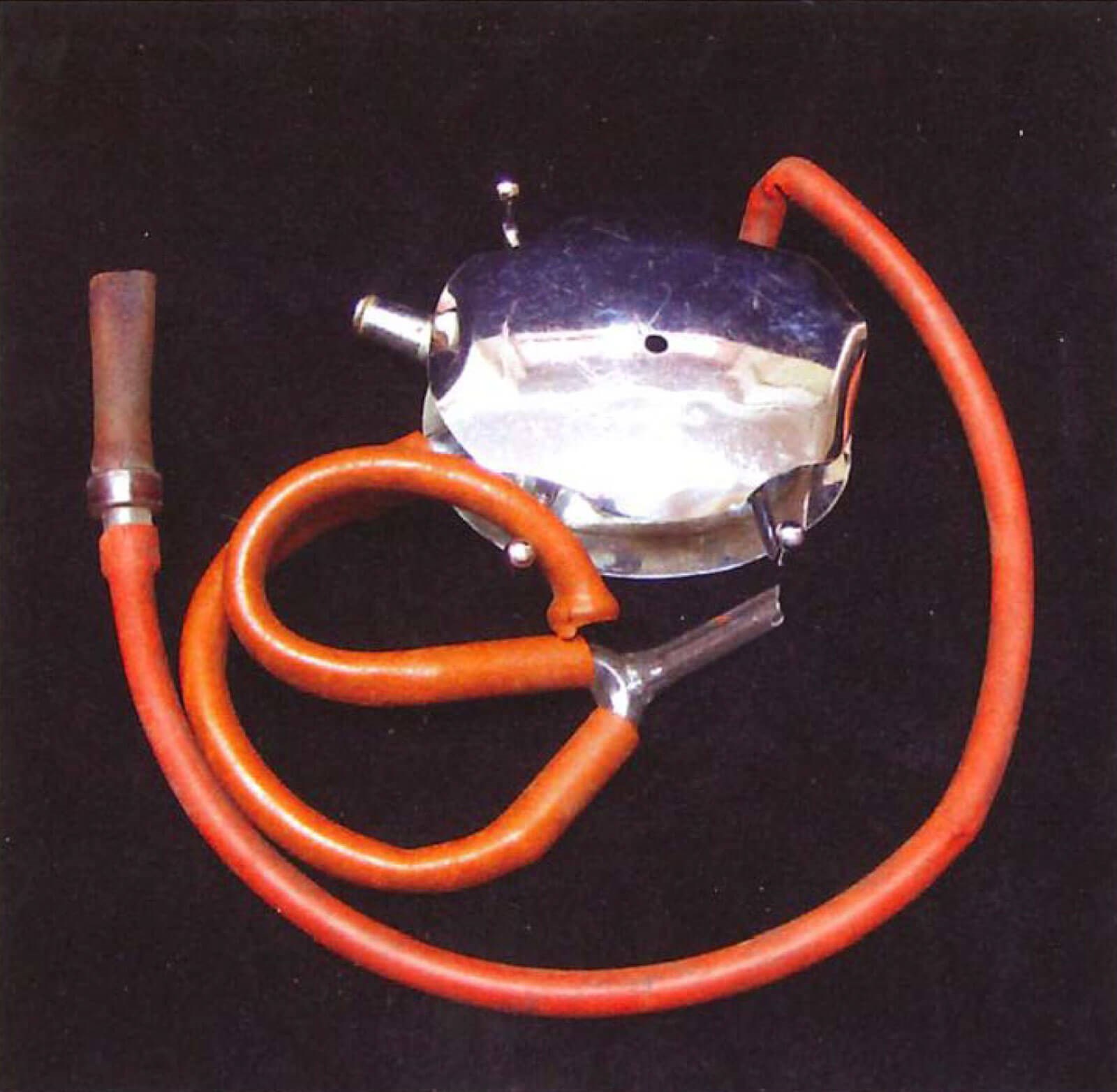
Figure 1.
The one illustrated here is from the Leicester instrument collection, there is another nice example from the Addenbrooke's collection; they are both in the Instrument Room of the BAUS Virtual Museum.
Cystotomy was an essential bladder drainage technique following open bladder procedures such as prostatectomy or open resection of bladder tumours. The box was described and illustrated in Freyer's 1908 Textbook of Genitourinary Surgery. It covered a short stout suprapubic wound drain and was held in position by an abdominal belt. The urine flowed away through two rubber tubes into a urinal placed between the patient's legs (Figure 2).
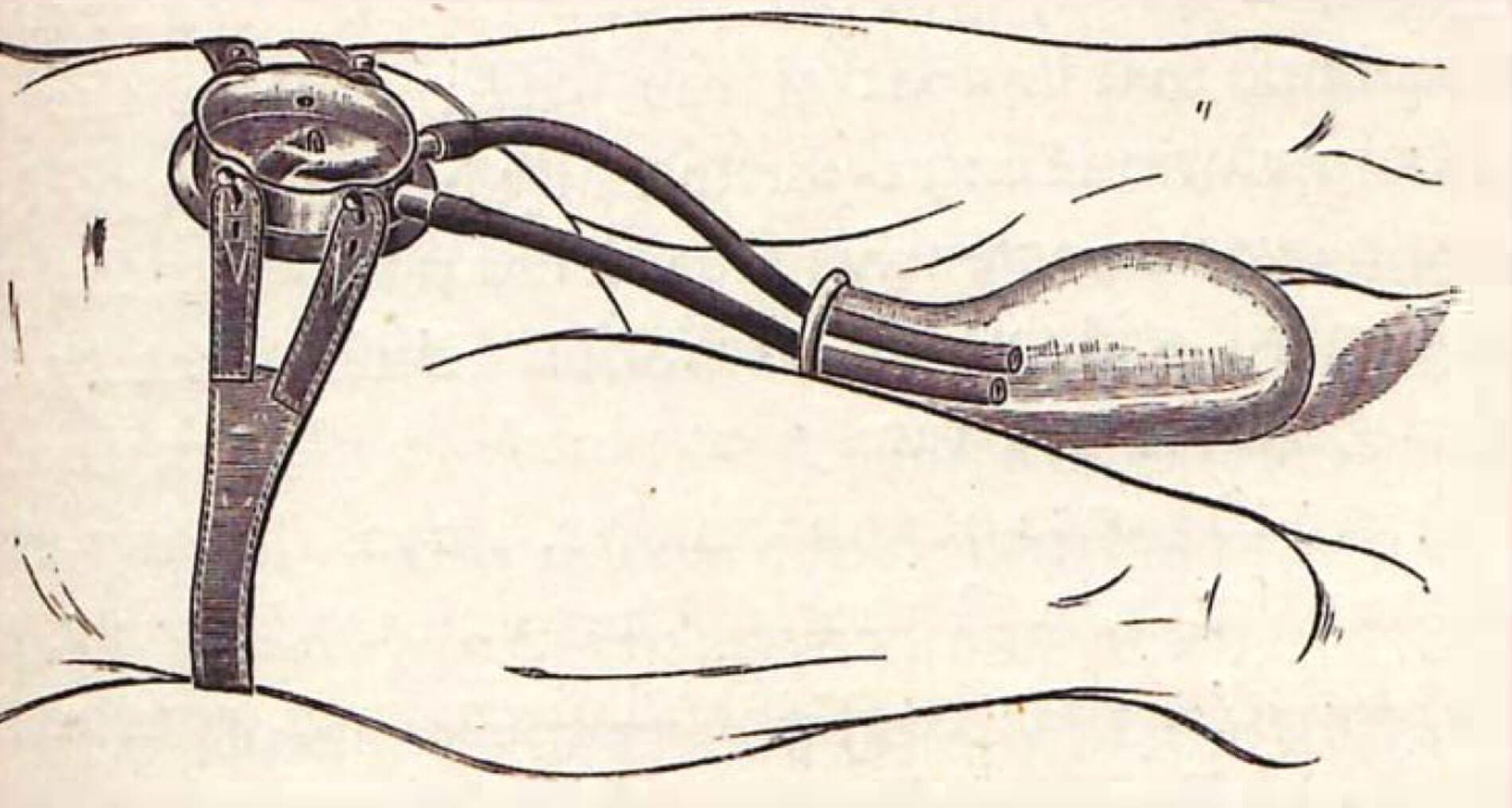
Figure 2.
Freyer said it was "safe and fairly efficient" but he covered the cystotomy with "cyanized gauze well wrung out of boric solution ... covered with large pads of cotton wool''. This soaked up the urine and was changed every four to six hours. He preferred this method to his friend's device.
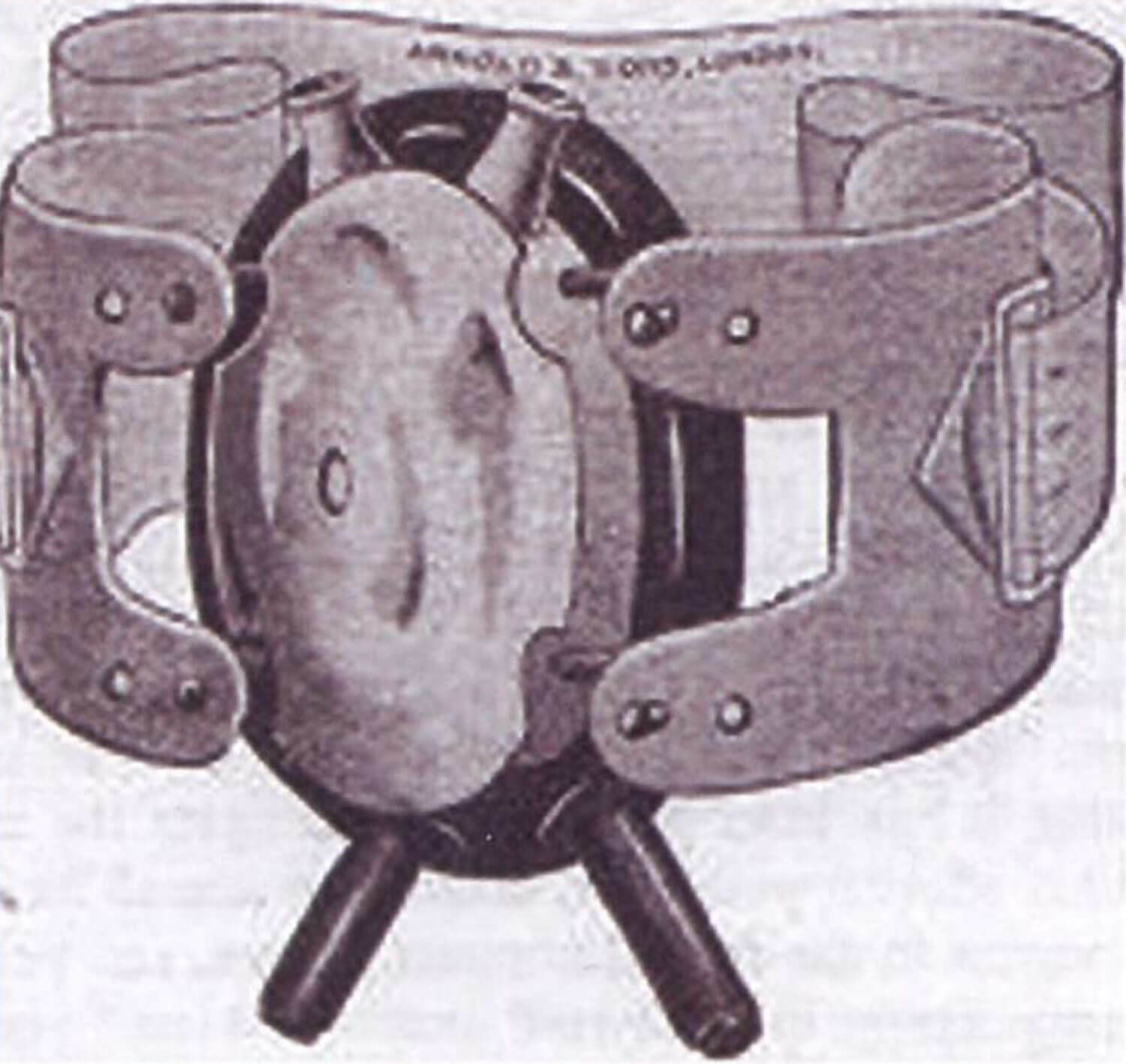
Figure 3.
In 1931 Frank Harvey introduced a rubber ring to the Hamilton Irving Box to improve the seal (Figure 3); he improved the design further in 1932. Even so, this must have been a clumsy way of collecting urine from a supra pubic cystotomy. It does make you grateful for the simple Foley catheter, doesn't it?
The Hamilton Irving Box was obviously still in use in 1946 as Campbell Begg, a South African, bemoaned "the lake of slimy, alkaline and offensive urine" which prevented wound healing! But even he thought it better than Freyer's method of urine soaked gauzes. He preferred a suprapubic suction apparatus.
Other methods of bladder drainage included the supra pubic trocar. This could also be used through the perineum or even the rectum. There were of course urethral catheters made of a multitude of materials, but I'll save these for a future article.
Here is a question about the four urologists mentioned in this article: Irving, Freyer, Harvey and Begg. Which one was given a Lakh (100,000) of rupees for treating the bladder stone of the Nawab of Rampur? The answer can be found at the BAUS Virtual Museum.
Originally published in print Mar/Apr 2012.