In this series of articles, I am going to show you some of the exhibits contained in the Museum of Urology, hosted on the BAUS website (www.baus.org.uk). I have long been fascinated by the historic quest for a medicine, pill or potion that could cure bladder stones, particularly in the eighteenth and early nineteenth centuries.
You might remember the previous article about Joanna Stephens (d. 1774), who in 1739 sold the British government her bladder stone remedy for £5,000. I recently acquired a book written in 1755 by her brother-in-law, David D’Escherny (b.c.1729), about her recipe and other cures for the stone. Bound within that book, at the back, was a separate 36-page pamphlet written in 1741 (although this copy seems to have been printed in 1752) by Doctor James Jurin, describing his own case of bladder stones and the medicine he took to treat himself (Figure 1).
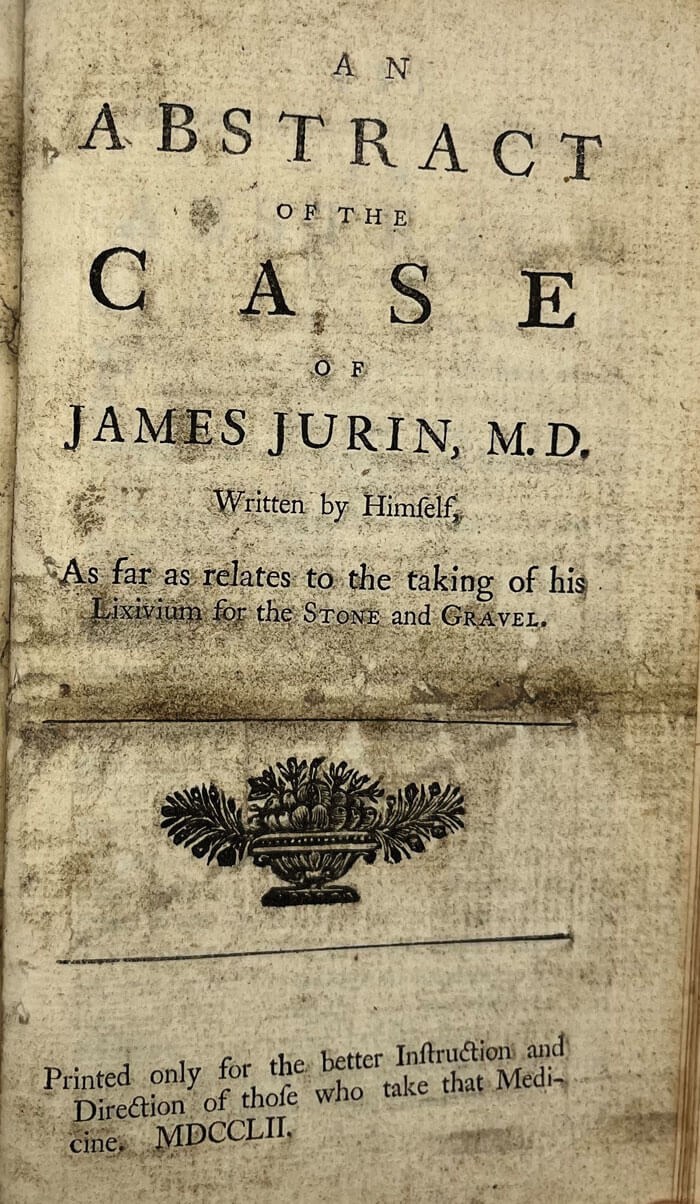
Figure 1: Frontispiece of James Jurin’s pamphlet. Author’s library.
James Jurin (1684–1750) was born in London, his father John was a London cloth dyer, and James was sent to Christ’s Hospital School (Figure 2). There, he won a scholarship to Trinity College, Cambridge where he was awarded his BA in 1705 and MA in 1709. In the same year, he travelled to Europe with fellow student, Mordecai Cary (1687–1751), who later became Bishop of Killala and Achonry; they attended lectures by the famous doctor and scientist Hermann Boerhaave (1668–1738) in Leiden. Jurin then moved to Newcastle as headmaster of the Royal Grammar School, but returned to Cambridge in 1715 to take his MD. He became a lecturer at the Company of Surgeons, physician to Guy’s Hospital and had a successful practice in both London and Tunbridge Wells. He was a Fellow of the Royal Society and in 1750, was President of the Royal College of Physicians.
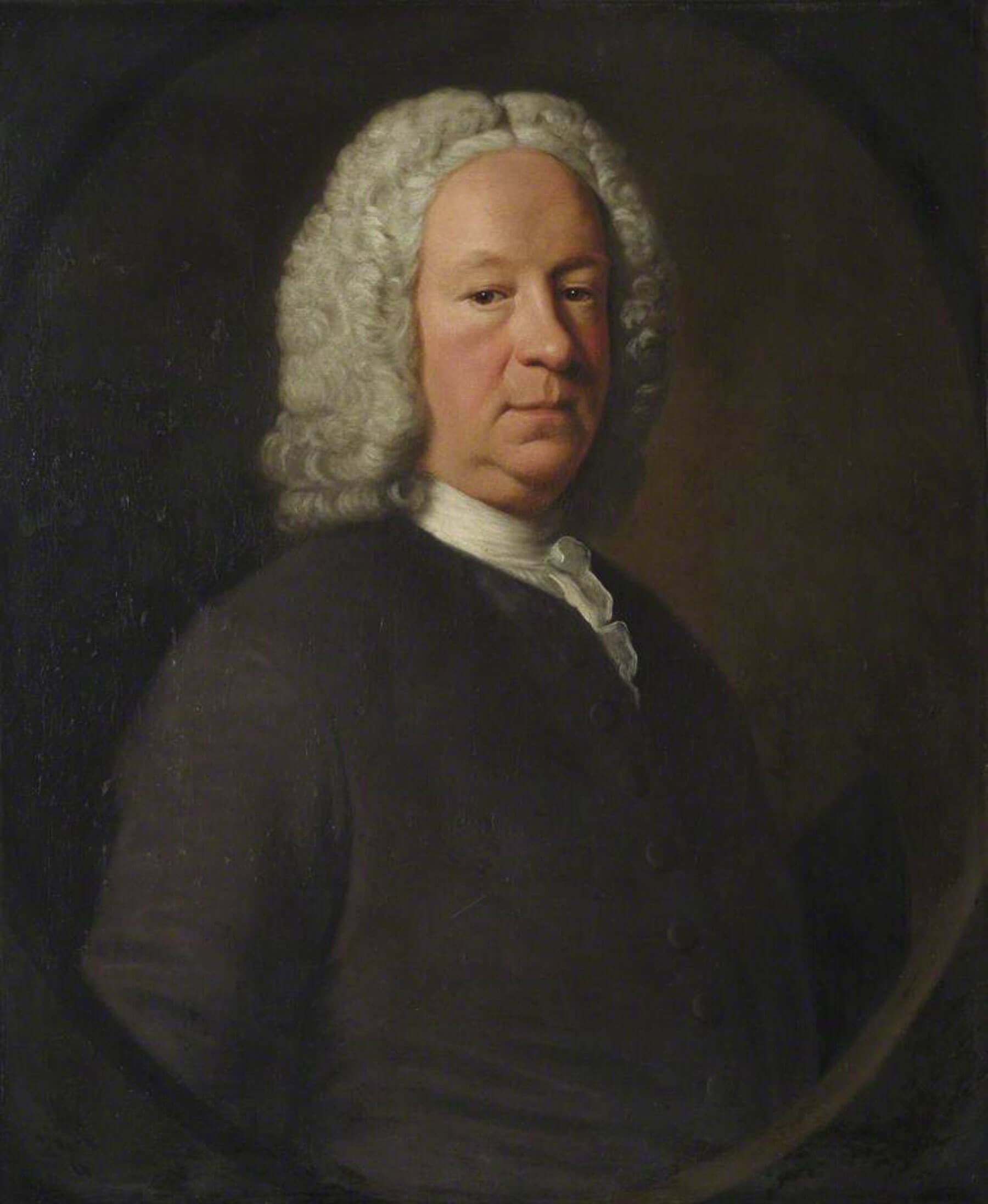
Figure 2: Portrait of James Jurin (1684–1750), attributed to Joseph Highmore (1692–1780). Reproduced by kind permission of the Master and Fellows of Trinity College, Cambridge.
Jurin suffered from stones; he occasionally passed gravel, and self-medicated with purging mineral waters, manna (the dried sap of the Sicilian flowering ash tree, Fraxinus ornus), itself a purgative, and Glauber’s salt (a sodium sulphate mineral salt, mirabilite), yet another purge. He admitted that he had neglected this treatment for a year or more (and who could blame him?) and at Christmas time 1740, he became symptomatic with an attack of ureteric colic, or as he described it, “a severe nephritic fit.” Although the acute episode only lasted a few days and he passed “a rugged red stone, the size of a pea,” he remained unwell with urinary frequency and strangury. He found that he could only walk slowly and travelling in his carriage, despite having spring suspension, brought on attacks of pain and haematuria. Jurin surmised that there was another stone in the bladder which was too large to pass.
Keen to avoid surgery, he began a search to find a cure. His first thought was Stephens’ medicine, given the many case reports and books supporting its efficacy. However, Jurin had also read postmortem reports of people who had taken it and subsequently died invariably still having residual stones. Stephens’ recipe was an unusual concoction containing soap, snail shells and herbs, and the medical literature of the time was suggesting it was the alkaline soap which was the most likely active ingredient. The medicine was also noted for its horrible taste, therefore Jurin decided to look into lixivium (also called soap lye) which is a major ingredient in soap. It is an alkaline solution produced by passing water through wood ash, the subsequent mixing of this with fat or oil forms soap. Jurin tried it in increasing doses, eventually taking over 1000 drops a day, he slowly noted his symptoms improving and by the end of 1741 was able to travel again, even in a hired coach with very poor suspension, without incident.
Patients describe their symptoms in different ways. Bladder stones often cause pain during movement; and I have read accounts of how the condition prevented people from walking, running, dancing and riding. I once had a patient who only noticed discomfort when driving around roundabouts. I did, however, enjoy Jurin’s particular way of monitoring his recovery. Not only did he find carriage rides painful, but was specific about the type of carriage, noting that even in his chariot (an eighteenth-century fast gentleman’s carriage) with modern suspension springs, he could not tolerate a short journey. Yet after treatment, even travel in a bone-shaking hired public carriage with terrible suspension didn’t bother him; a great, if unusual, way of monitoring symptoms.
Some time later, Jurin changed his medication. Unhappy with the varied strength of the soap lye and the awful taste, with the help of an apothecary friend, Mister Littlebury, he created Lixivium Lithontripticum. Jurin never confirmed exactly what was in his new medicine, preferring others buy it from Littlebury and Langley, the apothecary’s shop opposite Austin Friars on Old Broadstreet. Also, he felt at one shilling and six pence for half a pint it was reasonably priced, so no one would need to make it themselves. He later treated the politician Robert Walpole (1678–1745) with his Lixivium Lithontripticum, but he died and Jurin was accused of using an excessive amount of the medicine, leading to a flurry of medical pamphlets (the eighteenth-century equivalent of a viral social media argument).
Oral medication to remove stones and thus avoid the terrible symptoms, and equally terrible surgical treatments was sought by patients and doctors from time immemorial. Some were inexplicable, like eating a roasted starling; some were probably unhelpful but at least not poisonous, like barley water or marshmallow; and others, like Cantharides or Spanish Fly, were quite frankly, deadly.
In the eighteenth century, there was quite a lot of medical interest and experimentation, particularly after the introduction of Stephens’ medicine. Doctors tested the medicines by trying to dissolve bladder stones directly in them; Jurin did this with the stone he passed in 1740. Then taking it one scientific step further, they tried to dissolve the stone in the urine of patients who had taken the medications. Soap was felt to be the most active ingredient, especially by Reverend Stephen Hales (1677–1761), then the alkaline lye from which the soap was made. Some argued it was lime water from the burnt shells, an idea promoted by Robert Whytt (1714–1766) of Edinburgh. Many tried various natural mineral spring waters from spas around the world; these spa towns grew rich from this medical trend. Many of the treatments, even ancient ones, were alkaline: ground up shells, burnt herbs, lime waters. It is not unreasonable to suggest that some of these remedies may have relieved the irritative bladder symptoms and of course now we prescribe medicines, such as potassium citrate, to alkalinise the urine and dissolve urate stones. In those days, according to Sir Henry Thompson, 60% of stones were urate.
It is quite common for stone patients today when faced with the prospects of surgery to ask, “can I not just take a tablet?” In the past, before the introduction of anaesthesia and asepsis, how much more desperate that question must have been? Nowadays, patients will also research their own stone treatments on the internet and with the increasing use of AI get more detailed or desperate solutions. James Jurin was of course a doctor, but nevertheless over 280 years ago, he also scoured the latest books, pamphlets and articles in the Gentleman’s Magazine for a solution, not so different from patients today.