You searched for "cancer"
Demanding cases or nightmares in uro-oncology? Sep/Oct 2021
Active surveillance for prostate cancer: missing the boat Case In 2005 a 43-year-old man of Afro-Caribbean ethnicity was referred to our centre for investigation of suspected prostate cancer. Digital rectal exam revealed a firm right lobe, PSA of 2.3ng/ml, prostate...
Male genital mysteries
Every now and then urologists are asked to give an opinion on genital lesions and rashes. This article from University College Hospital London is certainly worth a read. Most conditions are benign but some are precancerous leading to penile cancer...
Simple cystectomy for benign disease
In the UK, due to cancer reorientation programmes by the NHS, radical cystectomies happen only in regional cancer centres. But there is no reason why simple cystectomies cannot take place in district general hospitals, often much closer to patients and...Endoscopic management of upper tract urothelial carcinoma
Upper tract urothelial carcinoma (UTUC) is a rare disease accounting for 5-10% of all urothelial carcinomas and has an annual incidence in Western countries of 1-2 per 100,000 [1,2]. It occurs more commonly in the pelvicalyceal system as opposed to...Prostate Scotland launches new research project into BPE with support from the Grand Lodge of Scotland
Prostate Scotland has launched a new two-year research project into benign prostatic enlargement (BPE), thanks to long-term funding support from The Grand Lodge of Scotland and Scottish Freemasons. The project aims to build a clearer picture of the experiences of...
Evaluation of the learning curve for learning MRI-US fusion prostate biopsies
With the advent of one-stop prostate cancer diagnostic clinics, the findings of this study are of interest to readers who may be implementing MRI-US transrectal or transperineal fusion biopsies to their clinical practice. This prospective cohort study evaluated 779 consecutive...Prostate Scotland appoints digital technology leader Peter Proud as new trustee
Prostate Scotland has appointed Peter Proud, Founder and CEO of Edinburgh-based digital technology company Forrit, to its Board of Trustees. Bringing more than 30 years of experience in digital transformation, data, and AI-driven innovation, Peter will support the charity’s work...The Urology Foundation
The Urology Foundation (TUF) is the only charity in the United Kingdom that raises money for research into all types of urological disease. Our ultimate aim as a charity is to discover the causes of urology cancers and conditions, to...EAU Guidelines App
The European Association of Urology (EAU) continues to lead on the latest guidelines within urology. The all new EAU guidelines app brings together the pocket version of the EAU guidelines with a much improved user interface. Both the cancer and...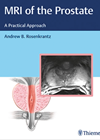
MRI of the Prostate: A Practical Approach
The MRI is a non-negotiable part of prostate cancer diagnosis and management. As a result, this book is an essential. This nicely illustrated and well written account covers aspects ranging from MRI protocols, through Prostate Imaging Reporting and Data System...