You searched for "patient"

SUSPEND suspended MET
This review is on the recent groundbreaking evidence on medical expulsive therapy (MET). MET using alpha adrenergic blockers (like tamsulosin) are in regular clinical practice. Even though it is an off label prescription, it is well accepted and practised world...Erectile Dysfunction Part I: pathophysiology and risk factors
Introduction Erectile dysfunction (ED) is defined as the inability to achieve and maintain a penile erection, which is adequate for satisfactory sexual intercourse. The Massachusetts Male Ageing Study (MMAS) reported the results of a regional survey of men aged 40–69...Demanding cases or nightmares in endourology? May/June 2017
In the sixth article in this series the authors describe endourology nightmares involving ileal conduits and calculi. Case 1 A 69-year-old man who had a cystectomy and ileal conduit for muscle invasive bladder cancer, presented with an acute kidney injury...Klinefelter’s syndrome
Klinefelter’s syndrome (KF) is the most frequent sex chromosome abnormality with an estimated prevalence of 1 in 500 to 1 in 700 newborn males and 1 in 10 in men with azoospermia. While the majority of cases are an XXY...What is the role of evidence-based medicine in urology?
The concept of ‘evidence-based medicine’ (EBM) was first developed in the early 1990s and was described as “the conscientious, explicit and judicious use of the current best evidence in making decisions about the care of individual patients” by the recently...ICS -EUS (International Continence Society and the Emirates Urological Society) Annual Meeting 2025
A special joint Annual Meeting of the International Continence Society and the Emirates Urological Society, taking place in vibrant Abu Dhabi in 2025. Inviting healthcare professionals from around the world interested in treating incontinence patients. Attendees can benefit from the...ICS (International Continence Society) 2024
Each year, the International Continence Society hosts its annual meeting bringing together healthcare professionals interested in treating incontinence patients. Attendees can benefit from the latest research, professional development and networking opportunities. It provides a platform to exchange ideas and share best practices. Leading experts in the field also present workshops and state of the art sessions.The High Operation
In this series of articles I am going to show you some of the exhibits contained in the BAUS Virtual museum of the History of Urology which is part of the BAUS website (www.baus.org.uk). In the last three articles I...Recent advances in the management of castration resistant prostate cancer
Castrate resistant prostate cancer (CRPC) is defined by disease progression despite androgen-deprivation therapy lowering testosterone to castrate levels. It may present as a rise in serum levels of prostate specific antigen (PSA), progression of pre-existing disease, or the appearance of...Demanding cases or nightmares in uro-oncology? Sep/Oct 2022
Treatment of prostate cancer in renal transplant recipients is challenging due to a lack of knowledge of the natural history of cancer in these patients, the anatomical position of the graft in the iliac fossa and its proximity to the...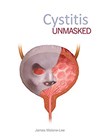
Cystitis Unmasked
Cystitis is often viewed as a heartsink diagnosis, and sometimes one of exclusion. The aetiology is multifactorial and misunderstood. Treatment has been based on dogma, and poor clinical and scientific evidence. The truth is, that despite the significant morbidity caused...