
You searched for "retention"
Minze Uroflow System
Minze Uroflow System with Bluetooth makes it possible for men, women and children with LUTs and bladder dysfunction to be assessed, diagnosed and monitored remotely in the comfort of their homes.Vasectomy Find: The UK’s #1 lead generation platform for urology services
Vasectomy Find is transforming how urologists grow their private practices. As the UK’s only dedicated lead generation platform for urology, we connect patients actively searching for private urology services directly with trusted urologists like you. Each enquiry we share is...An MA in medical education – is it for you?
I have recently completed a three-year MA in medical education at the University of Winchester, which has been an edifying experience. The following article may appeal to readers who are considering such a venture. I have been a consultant for...JCST, GMC, HEE and SACs: how this alphabet soup translates into a seven-year urology training programme
As many trainees will know, and I count myself among them, there are a plethora of organisations involved in our training. Most of us will be familiar with our deaneries, the haven we return to once a month for our...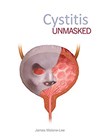
Cystitis Unmasked
Cystitis is often viewed as a heartsink diagnosis, and sometimes one of exclusion. The aetiology is multifactorial and misunderstood. Treatment has been based on dogma, and poor clinical and scientific evidence. The truth is, that despite the significant morbidity caused...BAUS 2023 Annual Scientific Meeting
BAUS June 2022 was certainly noteworthy for me personally, as Tim O’Brien passed on the baton of Presidency. It was also a very special meeting for everyone who participated. The event felt so refreshing after two years of COVID and...Bladder outlet obstruction
Case 1 Define the zonal anatomy of the prostate: A, B and C What is the significance of Zone A and Zone C? Clasify the types of lower urinary tract symptoms (LUTS) Which investigations should be routinely undertaken for a...Medical statistics for urologists: part 3 – diagnostic testing
Following on from the first two parts of this series (see Part 1 here, and Part 2 here), this final article aims to demonstrate how the theory of statistics applies to medical diagnostics. Probability in diagnostic testing Diagnostic tests refer...Saints preserve us!
In this series of articles I am going to show you some of the exhibits contained in the Museum of Urology, hosted on the BAUS website www.baus.org.uk. A saint is a holy person; the word derives from the Latin word...Testicular cancer (Jan 2016)
Case 1 A 26-year-old male presented with a two-week history of testicular pain and swelling. On examination the right testicle was enlarged, indurated and tender. Erythema of the scrotum on that side was also noted. Ultrasound of the testis reported...
Reliability of grading of VUR and other findings on VCUG
The gold standard for diagnosing VUR is still the voiding cycstogram (VCUG). These authors looked at the inter observer variability of grading of vesicoureteral reflux (VUR) using a VCUG and highlight the implications for treatment and prognosis as a results....


