
Features

GentleCath™ intermittent catheters
We know that Urinary Tract Infections (UTIs) are the biggest issue for catheter users. In the United Kingdom, 14 million people suffer from continence problems1. Although hydrophilic coated catheters (2nd generation) brought benefits compared to uncoated catheters (1st generation), users...
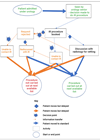
A sigma six approach to improving nephrostomy and antegrade stent services at a district general hospital – an audit project
As hospitals merge into larger trusts there becomes a centralisation of some services. Interventional radiology (IR) has been one of those services. Our district general hospital runs bi-weekly lR lists following service centralisation. Urology and IR most commonly liaise on...

The impact of menopause on bladder symptoms
The menopause is a natural process of ageing when the ovaries completely stop producing reproductive hormones (oestrogen and other sex steroids), and there are no monthly periods for 12 consecutive months. It normally occurs between the ages of 45-55 years...

Penile augmentation using injectable filler
Penile size is a major topic for many men and a source of anxiety throughout history. The common belief that a large penis is necessary to impress and satisfy their sexual partners has led to the notion that ‘bigger is...

The importance of active investigation and follow-up in bladder injury
Bladder injury (BI) is uncommon, and patients are typically managed by large multidisciplinary teams, dealing concomitantly with other injuries or diagnoses. BI can be categorised by cause (traumatic vs. iatrogenic) or anatomical location (intraperitoneal vs. extraperitoneal), requiring differing approaches to...

Ambulatory local anaesthetic implantation of percutaneous sacral nerve stimulators
Background The current treatment paradigm for detrusor overactivity (DO) and dysfunctional voiding (DV) includes conservative measures, pharmacotherapy, intravesical onabotulinum toxin A (Botox®), sacral nerve modulation (SNM / SNS) and urinary diversion as a last resort [1]. Incidence of DO is...

An inconvenient truth: reflections on the NHS
“What gets us into trouble is not what we don’t know. It’s what we know for sure that just ain’t so.” The above is a quote attributed to Mark Twain from the 2006 documentary, An Inconvenient Truth, which follows Al...

Convatec Healthcare is changing
Forever Caring At Convatec, ‘forever caring’ is our promise to give patients and healthcare providers the support they need as we bring to life our vision of pioneering trusted medical solutions to improve the lives we touch. Existing complications of...

Giggle incontinence – not a laughing matter!
For many decades, the condition of giggle incontinence (enuresis risoria, giggle micturition) has remained a rare and poorly understood condition. Patients (90% female) present in their teens, with the history revealing an issue for many years. It is debilitating and...

Black men are more at risk from prostate cancer, but we won’t let it stay that way – an update from Prostate Cancer Research
- CHARITY FOCUS - Focusing on all of disease characteristics, societal factors, and better communication gives us real potential to fix a disparity that has persisted for too long. When it comes to health inequity, the numbers are stark. Black...

Botulinum toxin – from the sausage poison to urology
Botulinum toxin is the first biological toxin to be licensed for use in treating human disease and since its first therapeutic use in the early 1980s for strabismus has become widely used in the fields of ophthalmology, cosmetic surgery, migraine...

Sperm selection techniques in assisted reproductive technologies: state of the ART?
Infertility is the inability to achieve pregnancy following one year of regular, unprotected intercourse (in the fertile phase of the menstrual cycle). Infertility is a common problem that affects between 7 and 15% of couples worldwide, with male factor infertility...


